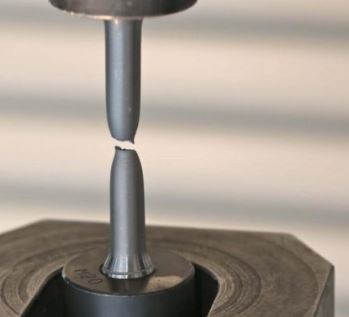
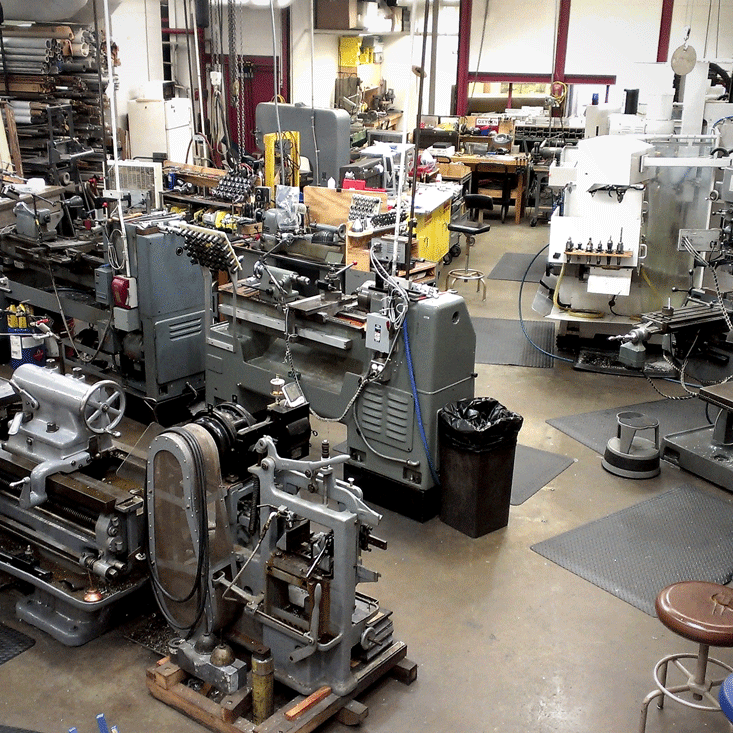
Anderson Shumaker supports both destructive and non-destructive testing to verify that material and processing meet your specification—not guesses, not “should be fine,” but documented results. Destructive testing evaluates mechanical properties and internal structure by testing representative samples, and it’s often used for first-article approval, certification, process validation, or investigating a problem lot. For the most objective results, the majority of testing is performed through trusted third-party accredited laboratories, with clear traceability back to your heat/lot and order documentation. We routinely support requirements to AMS, ASTM, military, and customer-specific standards, and we coordinate testing plans to match what your application actually needs.

Destructive / Laboratory Tests
-
Charpy Impact
-
Tensile (yield, tensile, elongation, reduction of area)
-
Chemical analysis (heat chemistry verification / PMI as required)
-
Hardness (Brinell/Rockwell)
-
Metallurgical evaluation (microstructure, grain size, decarb, inclusion rating as required)
-
Macro-etch / macrostructure (flow lines, soundness, centerline indications)
-
Stress rupture / elevated temperature testing (when required)
-
Failure analysis and investigative testing for nonconformances
Contact us with your forging project for a quick quote today!
Non-Destructive Tests
- Ultrasonic Testing (UT)
- Magnetic Particle Inspection (MT)
- Liquid Penetrant Inspection (PT)
- Radiographic Testing (RT) where applicable


